



HR
Q1 2026 in memes: The moments all HR's lived through

Team peopleHum
March 25, 2026

6
mins

.png)
HR teams begin every new quarter in a similar fashion: enthusiastically releasing a new strategy document and setting an ambitious set of priorities. And then reality, as it reliably does, shows up.
Q1 2026 delivered a full spectrum of experiences. There were genuine moments where the case HR had been making for years finally landed, the budget was approved, and the seat at the AI strategy table was finally granted. There were also the familiar frustrations: good initiatives that were overlooked, conversations that were harder than they needed to be, and the particular kind of professional fatigue that comes from navigating organisational complexity at pace.
We are going to examine all these moments that defined Q1 for HR, with the help of Phia, peopleHum's mascot, whose emotional range turned out to be perfectly suited for the Q1 experience. Each meme below captures a moment that HR professionals will recognise.
.gif)
For several years, the AI strategy in most organisations was treated as the concern of the senior leadership, the IT team and the finance team. HR teams, who had to deal with the human consequences of this adoption, were often overlooked or brought into the fold at the last moment.
Q1 2026 marked a significant shift in this regard. Research has shown that the organisations that have implemented AI tools in their workflows without HR’s involvement were actively correcting this error. CHROs are now actively included in AI governance committees, and employee analytics teams have real influence on how the AI tools are structured and adopted.
The significance of this shift cannot be overstated. When HR is involved in AI strategy from the outset, processes like fairness audits and employee transparency obligations are addressed before the AI system is live. The result is that the workforce experience of AI adoption is more humane, more honest, and more effective as a result.
Hence, Phia’s dancing is proportionate. The floating hearts are earned.
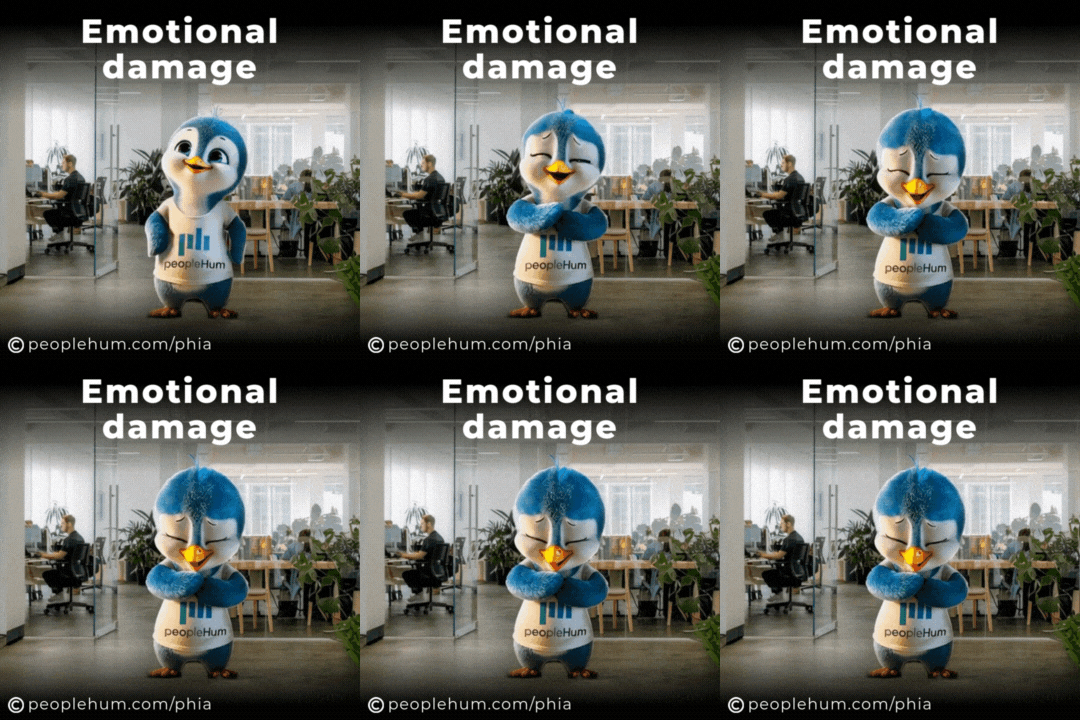
Exit interviews are among the most valuable tools in HR's toolkit. If implemented properly, they allow HR teams to gather honest feedback and for the departing employee to leave with dignity. But, in practice, they are often either too structured to be useful or, occasionally, significantly more informal and subjective than necessary.
Q1 2026 fell in the latter category. It began with a combination of restructurings, AI-driven role changes, return-to-office policy reversals, and sustained organisational uncertainty, creating conditions in which departing employees had a great deal to say. Research has concluded that departing employees are more forthcoming when they believe the organisation is genuinely listening rather than viewing it as a mere formality. And Q1 gave employees a great deal to be forthcoming about.
The feedback that emerged from these conversations was more subjective than HR teams were used to receiving. Management behaviours were described in detail, team dynamics were characterised with precision, and systemic issues were named directly by the departing employees.
Phia's expression symbolises how HR teams react to this: with composure and arms-crossed energy of a professional who is absorbing a significant amount of information in real time and has already begun thinking about what comes next.
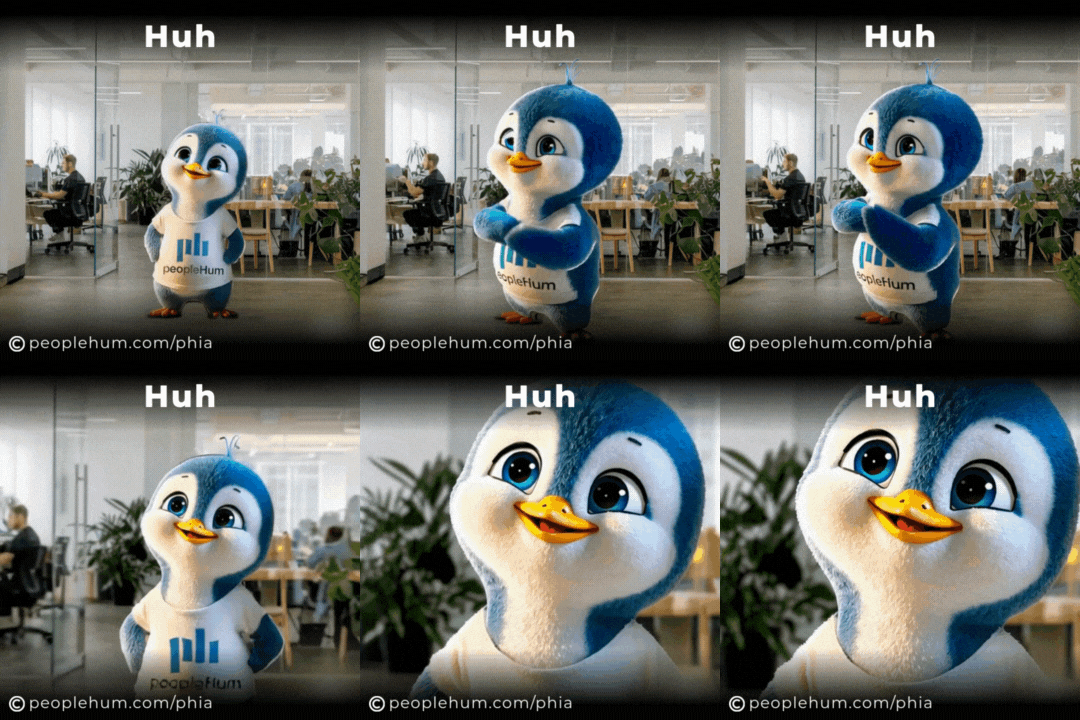
Q1 2026 was the quarter in which a significant number of organisations confronted a gap that HR had been trying to flag for some time. The data coming back after a significant AI investment did not match the business case that had justified the spend.
Research published in early 2026 found that only one in fifty AI investments delivers transformational value, and only one in five produces any measurable return on investment. Separately, research on employee AI readiness found that the majority of workers did not feel confident using AI tools in their day-to-day work, because the infrastructure required to use them well, like the training, governance, and honest communication about what the tools do and do not do, had not been built.
Phia’s "Huh" accurately represents the moment an organisation processes a significant gap between expectation and reality, and, ideally, begins asking the right questions about why it formed. The most important question is: what does HR need to build now, and what authority does it need to build it well?
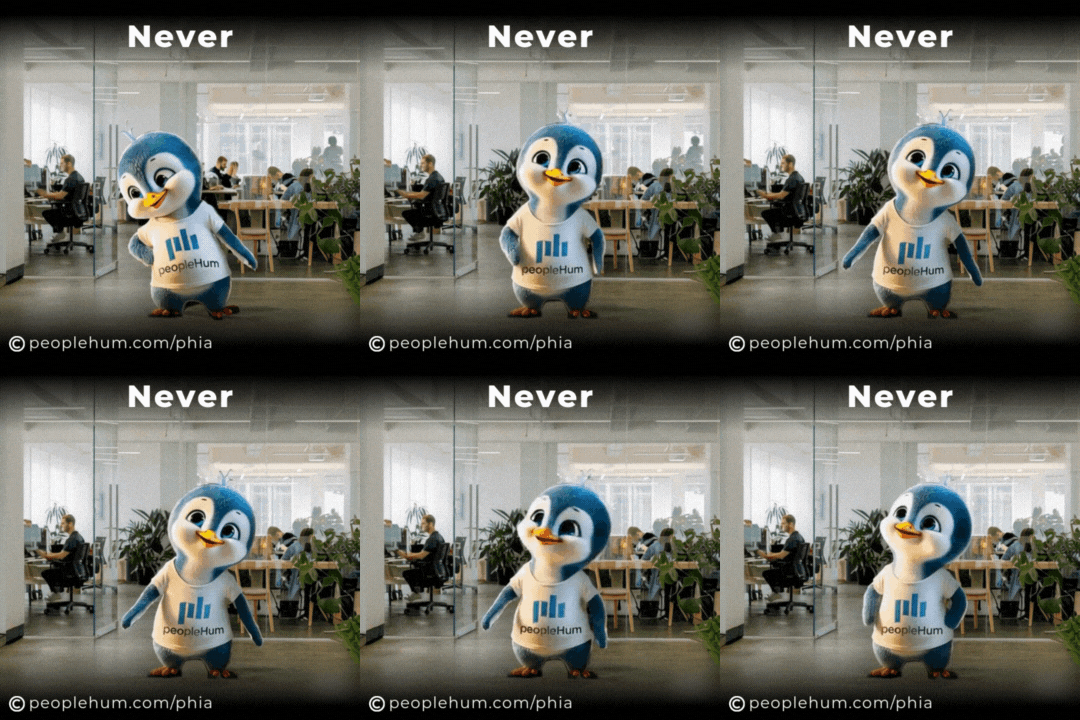
It is the first quarter of 2026, yet the conversation about the return to office is still ongoing. Despite multiple policy iterations, high-profile executive reversals, and a significant body of research on both sides, it has not been resolved.
Q1 added another chapter. Several major organisations moved to strengthen their in-office requirements, citing collaboration, culture, and the difficulty of managing performance in dispersed teams. The workforce response, though, suggested that the framing of office attendance as a cultural imperative was not delivering the consistency that leadership intended.
For HR, Phia's "Never" in this meme represents the employee who restructured their commute, their childcare arrangements, and their daily routine around a flexibility commitment that has since been revised. And it represents the deeper organisational resistance to the absence of a credible rationale for why the requirement has changed and what the organisation is genuinely trying to achieve by changing it.
.gif)
Q1 2026 was the quarter in which many organisations fulfilled their AI upskilling commitments. But the caveat is that, in a significant number of cases, the upskilling programme consisted of a self-paced online module, typically between three and five hours in length, available on the learning management system.
The issue was that this module had no role-specific content, no connection to the employee's actual workflow or the specific AI tools being deployed in their function, no development pathway attached to completion, and no manager conversation built around what the employee had learned or how it applied to their role.
HR professionals who recognised this issue in Q1 have aimed to solve it by building a case for role-specific development, learning that connects to actual workflow change, and development conversations between managers and employees about what AI means for this specific role.
Phia's expression is the professional version of the assessment being made internally. The "Okay, great" is composed. The next conversation is going to be about Q2 investment in something that actually answers the question the workforce is asking.
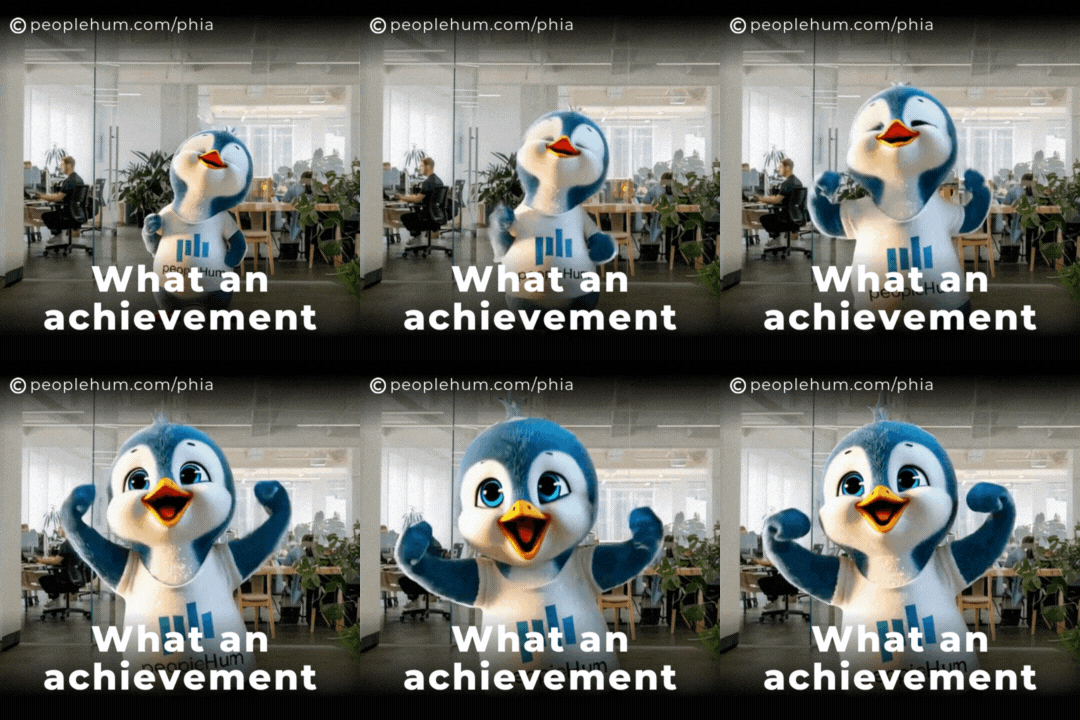
Every HR function has that one initiative, which is agreed in principle, but is consistently deprioritised in practice. In Q1 2026, for many HR teams, that initiative was manager development, and it was approved.
This approval was a recognition of the argument the HR team had been consistently making: that the quality of the manager relationship is one of the most significant aspects of employee engagement, retention, and performance, and that leaving managers to develop that capability through trial and error is a cost the organisation cannot continue to absorb.
To get to this point, HR teams had to build evidence-based advocacy that included business cases that connected manager development investment to measurable outcomes, such as engagement scores, attrition rates, performance ratings, and team-level productivity, built over time.
Phia's celebration, the arms-wide-open moment, is what the end of an advocacy effort looks like when it lands. HR professionals who experienced this in Q1 earned every second of it.
Q1 2026 asked a great deal of HR professionals. They had navigated big wins, frustrations, celebrated hard-earned approvals, dealt with uncomfortable feedback with composure, and continued making the case for employee-centred approaches in an environment that is moving faster than most organisations are prepared for. Each of the six moments captured in this blog point to the same underlying truth: that the human dimension of organisational change is not a secondary consideration, and the functions that treat it as one are paying a high cost.
The implications for Q2 are clear. The AI strategy seat needs to be held, the exit interview intelligence needs to be acted on, the return-to-office rationale needs to be built rather than mandated, the upskilling commitment needs to be replaced with something that actually answers the workforce's question, and the manager development programme, now approved, needs to be delivered with precision. Phia has captured every emotion the quarter produced. The rest is HR's to act on.


HR insights delivered to your inbox.
Sign up to our newsletter and get expert tips on the latest trends, tactics, and thought leadership on all things HR.


%20(1).jpg)
.jpg)
.jpg)


