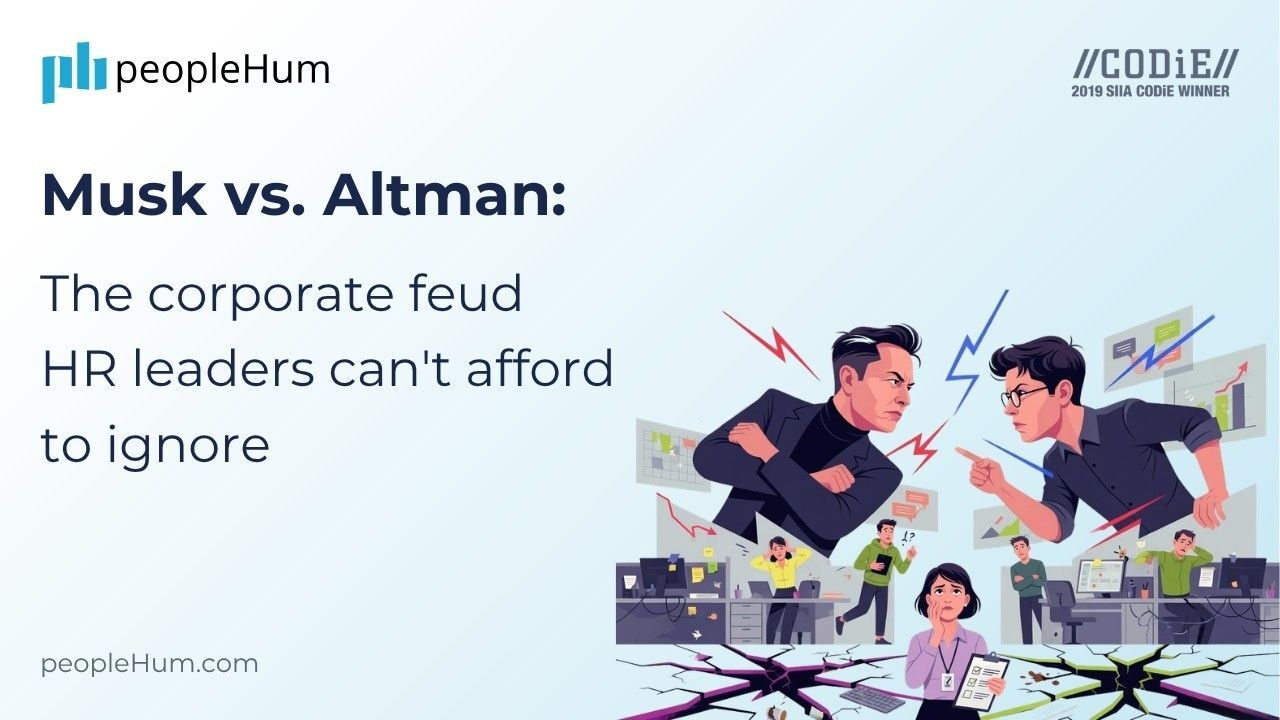
It is a Wednesday morning. Two members of the same team are in back-to-back meetings, sitting three chairs apart, and have not spoken directly to each other in eleven days.
Nobody has reported anything or even filed a complaint. Their manager has noticed the tension but has not found the right moment to address it. The rest of the team has noticed too and has quietly started routing communications around the two of them to keep things moving.
The work is still getting done. Yet nobody is measuring the cost of this conflict.
This is how most workplace conflicts look. It does not involve dramatic confrontation. Just a widening silence, and an organisation absorbing the damage while waiting for something to force the issue into the open.
By the time most conflicts reach HR formally, they have already been running for months. The relationships are irreparable, and the morale of the entire team has deteriorated. And the options for resolution have narrowed significantly.
So, how can HR teams solve this conflict? An obvious solution is AI. Think about it: what if conflicts could be identified and addressed before they reach HR’s desk? What if an intelligent system could detect the early signals of interpersonal tension, provide a structured channel for the people involved to work through it, and defuse a dispute before it turns into something that requires formal intervention?
This is not a dystopian possibility anymore. The technology exists. The question is whether HR is ready to think seriously about how to use it.
What does AI-mediated conflict resolution look like?
AI conflict resolution tools provide a structured, private channel through which an employee can raise a workplace concern, receive guided prompts that help them clarify what the issue actually is, and identify what outcome they are looking for. In practice, it addresses one of the most common barriers to conflict resolution: many people cannot clearly articulate what is wrong until they are asked the right questions.
At a more advanced level, AI tools can facilitate a structured exchange between the parties in a dispute. Each party submits their perspective privately. The AI identifies the areas of agreement, the areas of genuine disagreement, and the underlying interests on each side. It provides both parties with a structured summary of what the other person has said, after removing the emotional charge from the original communication. It then facilitates a structured dialogue aimed at reaching a resolution that both parties can accept.
At the most sophisticated level, AI tools can detect the signals of emerging conflict before either party has flagged them. Sentiment analysis across team communication platforms, changes in collaboration patterns, declining engagement in shared work, and shifts in the tone of direct communication between specific colleagues can all signal an interpersonal tension that has not yet been named.
How does AI add genuine value in conflict resolution?
- Removes the fear of judgment: Employees who are reluctant to raise a conflict with HR teams or with their manager because they fear being judged or labelled are significantly more willing to engage with an AI system. This is because an AI tool does not have a relationship with either party, nor does it talk to other people in the organisation. For employees who experience formal conflict channels as socially risky, AI provides a genuinely private form of communication.
- Available at the time of conflict: Human mediators and HR professionals are not available at eleven o'clock on a Tuesday night when an employee is processing a difficult interaction from that day's meeting and is most motivated to do something about it. AI tools are. The ability to engage with a conflict resolution process at the moment of peak motivation, rather than scheduling a conversation for next week when the emotional urgency has dissipated, is a genuine advantage.
- Creates consistency across the process: Human mediators, however skilled, bring their own perspectives, communication styles, and unconscious biases to conflict resolution conversations. AI tools apply a consistent process to every conflict they handle. This does not make them better than human mediators. It makes them more consistent, which is particularly valuable in organisations where the quality of conflict resolution varies significantly depending on which manager or HR professional happens to be involved.
- Generates verifiable data for HR teams: Every conflict that passes through an AI-mediated resolution process generates structured data. HR can analyse that data to identify patterns: teams where conflict is concentrated, managers whose working style is generating recurring tension, types of disputes that keep surfacing in specific parts of the organisation.
Where AI falls short: The limits HR must understand
The case for AI-mediated conflict resolution is real. So are the limits. HR must understand both with equal clarity.
- AI cannot read the full human context of a dispute: Workplace conflict is rarely only about what it appears to be. For instance, a dispute between two colleagues over a missed deadline may actually be about a power dynamic that has been building for months. An AI tool working from the information provided to it cannot access the full context of an interpersonal situation. A skilled human mediator, by contrast, can see the underlying context, notice what is being avoided, and probe for the real issue beneath the surface-level.
- AI cannot manage high-emotion situations: Some conflicts are not suitable for AI mediation. For instance, a harassment complaint or a bullying case involving a significant power imbalance is a situation that requires human mediation. Routing them through an AI system would not just be ineffective but potentially harmful to the people involved.
- AI can be gamed: Employees who are motivated to appear cooperative without genuinely engaging in resolution can provide the responses that the AI system is looking for without any real intention of changing their behaviour. But a skilled human mediator can usually detect this. An AI system may not. HR must design AI conflict resolution programmes with this risk in mind, and must ensure that human review is built into the process for cases where the AI-facilitated resolution does not hold.
- AI cannot help repair personal relationships: Resolving the immediate dispute is not the same as repairing the relationship. Two colleagues who reach a structured agreement through an AI-mediated process may have resolved the presenting issue without rebuilding the trust that the conflict damaged. That repair requires human interaction. It requires the specific kind of conversation, acknowledgement, and demonstrated change that only people can provide.
HR’s role in an AI-mediated conflict framework
HR teams spend significant time managing conflicts that should have been resolved at an earlier stage. Every hour HR spends reconstructing the history of a dispute that has been running for six months is an hour not spent on the strategic work that the organisation needs from them.
AI-mediated conflict resolution, when well-designed and properly governed, moves the early-stage, resolvable disputes out of HR's caseload and into a structured process that resolves them faster and with less damage to the relationships involved. HR then focuses its attention on the complex, high-stakes, and sensitive cases that genuinely require human expertise.
- HR must design the triage framework: Not every conflict is suitable for AI mediation. HR must build a clear framework that determines which types of disputes can be routed to an AI-mediated process, which require immediate human involvement, and which require a combination of both.
- HR must maintain oversight of AI-mediated outcomes: Every resolution reached through an AI-mediated process must be reviewed by a human HR professional to ensure that the resolution is genuine, that it has not papered over a more serious issue, and that the parties involved are not experiencing the AI process as a substitute for being heard by a real person.
- HR must communicate the purpose of the system clearly: Employees who do not understand what the AI conflict resolution tool is for, how it works, and what happens to the information they provide will not use it honestly. Or they will not use it at all. HR must invest in clear, transparent communication about the tool before it is deployed, and must create genuine feedback channels that allow employees to raise concerns about how the system is operating.
- HR must use the data the system generates: The systemic intelligence that AI-mediated conflict resolution produces is only valuable if HR uses it. Building the analytical capability to identify patterns in conflict data and acting on those patterns through management development, structural changes, and proactive interventions is the highest-value use of AI in this space.
AI-mediated conflict resolution is not a replacement for human judgment in the workplace. It is the infrastructure that ensures human judgment is applied at the right moment, to the right cases, with the right information
Key Takeaways
- Most workplace conflicts reach HR only after months of unaddressed tension, by which point relationships are damaged, team morale has suffered, and resolution options have narrowed significantly.
- AI conflict resolution tools add genuine value in three specific ways: they remove the fear of judgment that stops employees from raising concerns through formal channels, they are available at the moment an employee is most motivated to act on a conflict, and they apply a consistent process regardless of which manager or HR professional is involved.
- At the most sophisticated level, AI tools can detect the early signals of interpersonal tension through sentiment analysis, changes in collaboration patterns, and shifts in communication tone, before either party has named the problem. This is where the technology has the highest potential to prevent conflicts from compounding.
- AI has real limits that HR must understand with equal clarity. It cannot access the full human context of a dispute, cannot manage high-emotion situations like harassment or bullying cases, can be gamed by employees who appear cooperative without genuinely engaging, and cannot repair the trust that conflict damages.
- HR must build a clear triage framework that determines which disputes can be routed to AI mediation, which require immediate human involvement, and which require both. Every AI-mediated resolution must be reviewed by a human HR professional to ensure it is genuine and has not obscured a more serious underlying issue.
- The systemic data that AI conflict resolution generates is one of its most valuable outputs. Patterns in conflict data reveal teams under stress, managers generating recurring tension, and structural issues that proactive intervention can address. HR must build the analytical capability to act on this intelligence, not just collect it.
See our award-winning HR Software in action

Book a demo
Schedule a demo





.jpg)


%20(1).jpg)
.jpg)